
Your Cart is Empty
Plastic Footprint vs. Carbon Footprint: How do they compare?
Climate change is a complex matter that demands more of our collective action every day. Doomsday reports are constantly being...
Ever wonder why some athletes seem to have an endless reserve of energy and laser-sharp focus, while it takes you a few cups of coffee just to get through the morning? The difference might come down to one powerhouse nutrient: natural creatine.
At Amandean, we’re on a mission to redefine what real, effective supplementation looks like. We’re leaders in premium-grade formulas with clinically studied ingredients, designed for people who want results without compromise. From sustainably-sourced collagen to creatine, our products are crafted with the highest standards of purity and bioavailability. We want you to train harder, think clearer, and glow brighter, all with complete confidence.
In this piece, we’ll unpack why natural creatine deserves a spot in your wellness routine, how it supports everything from peak performance to brain health, and what makes Amandean’s approach the cleanest option on the market.
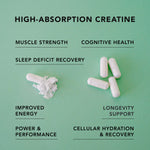



Creatine is a naturally occurring molecule your body produces primarily in the liver, kidneys, and pancreas, at about 1 gram per day. It’s formed from the amino acids glycine and arginine and then transported through your bloodstream to tissues with high energy needs, like your muscles and brain.1
Once inside the cells, creatine is converted into phosphocreatine, a quick energy reserve to help regenerate ATP (adenosine triphosphate), your body’s primary energy currency. About 95% of your creatine is stored in skeletal muscle, making it vital for short bursts of power and rapid recovery between efforts.1
In addition to its role in energy metabolism, creatine helps maintain cellular hydration and supports buffering processes that stabilize pH levels during high-intensity activities. According to a review on creatine supplementation, creatine can also be found in neurons and other tissues, suggesting broader roles beyond muscle performance.1
You obtain natural creatine from food, mostly animal-based proteins like red meat and fish. But here’s the catch: You'd need to eat a lot (think: multiple pounds of steak daily) just to get anywhere near the levels your muscles crave for peak performance and recovery. Most diets only deliver about 1–2 grams of creatine daily, which isn’t enough to fully satisfy your muscle stores.1
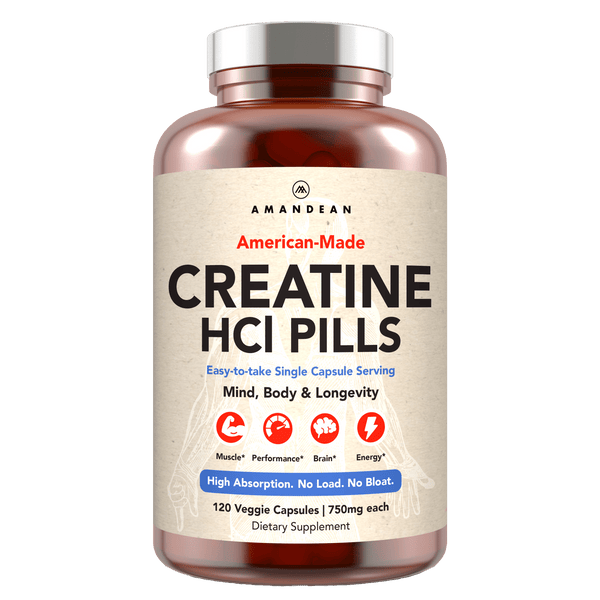
That’s where supplements come in to save the day. High-quality creatine supplements can boost your muscle creatine and phosphocreatine levels by 20–40%, supporting everything from strength and power to faster recovery after those challenging workouts. For instance, each single-serving capsule of Amandean’s Creatine HCl delivers the equivalent of 5 grams of creatine monohydrate in a highly absorbable form. This is your convenient, zero-fuss ticket to leveling up.
Whether you’re an athlete chasing new personal bests or looking to feel stronger and more energized, Amandean’s clean, science-backed formula makes it easier than ever to give your body the boost it deserves.
If you’ve worked out in a gym or browsing wellness blogs, you’ve likely heard the word "creatine" tossed around. But is there a meaningful difference between "natural" and "synthetic" creatine?
Natural creatine refers to the creatine found naturally in whole foods like red meat and fish. This "natural" form is exactly the same molecule your body makes and stores.1 While getting everything from your diet sounds ideal, the amount of creatine you'd need to match what’s in a standard supplement dose is pretty impractical. So, diet alone can fall short for people who want to maximize their energy reserves.
Synthetic creatine is produced in controlled lab settings like the popular creatine monohydrate. It's typically made by combining compounds such as sarcosine and cyanamide. Despite being "lab-made," synthetic creatine is chemically identical to natural creatine.1 Consider the difference between water collected directly from a spring and purified bottled water — the source may vary, but the end molecule is the same.
Whether from food or supplements, creatine is ultimately the same molecule. Supplements like Amandean’s Creatine HCI offer a practical, efficient, and consistent way to elevate muscle stores. That’s why they’re so widely used by athletes, active individuals, and even those interested in supporting general health.
So, why all the buzz around creatine? Is it just another flash-in-the-pan wellness trend, or does it actually bring some serious muscle power to your routine? Spoiler alert: It’s the latter. Here’s why:
About 95% of the body's creatine is stored in your muscles, acting like a rapid-response energy bank. Roughly 60% of that is in the form of phosphocreatine, ready to help regenerate ATP — the fuel that powers every rep, jump, or sprint.1 According to a comprehensive review published in MDPI, this boost can mean greater energetic output and better performance during high-intensity, short-burst activities (like that last sprint to the finish or those extra squat reps you didn’t think you had in you).2
Creatine isn’t just about pushing harder; it may help you bounce back faster, too.2 Research from MDPI suggests creatine supplementation can facilitate recovery from exercise-induced muscle damage and may even support post-injury rehabilitation.2 That translates to fewer sore days on the couch and more time doing what you love, whether that’s hiking, cycling, or keeping up with an energetic pup.
While creatine is a star in the gym, it doesn’t stop there. Because your brain cells rely on ATP just like your muscles do, creatine may help support cognitive function and mental clarity1 — perfect for that big presentation, marathon study session, or just staying sharp in daily life.
There’s also promising research into creatine’s potential antioxidant properties and its role in supporting healthy aging by helping minimize muscle loss (a natural process called sarcopenia).1 More muscle means better mobility and more confidence as you move through every stage of life.
Creatine supplementation isn’t exclusive to weightlifters or high-performance athletes. As the MDPI review highlights, it may offer benefits for both healthy men and women, as well as young adults and elderly individuals.1 Interestingly, vegans and vegetarians often see even more pronounced increases in muscle creatine levels when supplementing, since their baseline stores tend to be lower.2 This is also true for women and older adults, so supplementation can be especially helpful in these groups to support strength and overall vitality.1
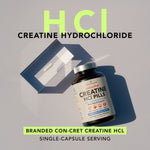
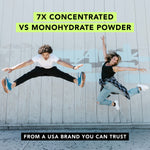
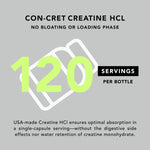
At Amandean, we’ve packed all this science into our vegan-friendly Creatine HCl capsules. Made in the USA with branded CON-CRĒT® (the only American-made creatine), each capsule delivers a highly absorbable dose equivalent to 5 grams of creatine monohydrate. Our Creatine HCl formula is 7X more concentrated than typical monohydrate powders, meaning you get maximum bioavailability and absorption in a single, easy-to-take veggie capsule. Plus, it’s gluten-free, non-GMO, and free from fillers, additives, and stearates.
This combination of creatine with HCI is ideal for those looking to bulk up. A study comparing different forms of creatine showed that creatine HCI helped support similar strength and muscle benefits as traditional creatine monohydrate, but with a friendlier approach to your body composition.3 it provided more lean muscle support without the standard bloating or extra water weight.3
In short, creatine supplementation isn’t just about chiseled calves or a sharper memory (although we’re not turning those down!). It’s a scientifically supported way to support strength, resilience, and brilliance — inside and out. Bend, flex, lift, and think your way to a better you!
Alright, so you’re sold on the power of creatine — what now? No need for a lab coat or complicated rituals. Adding creatine to your routine can be simple, straightforward, and even a little fun!
With a few mindful tweaks, getting enough creatine can be a seamless part of your daily routine. Cheers to stronger days ahead!
Read also:
Sources:
If you’re in the “I want results yesterday” club, creatine won’t disappoint. Many people start noticing benefits — like more energy and improved workout performance — within two to four weeks of consistent use. Remember: the key is steady, daily use. You might not magically turn into The Hulk overnight, but you may notice an extra pep in your step.
Yes! Creatine is one of the most widely studied and trusted supplements out there, and research consistently shows it’s safe for long-term use in healthy adults when taken as directed. Remember to stick to recommended dosages and, as always, check in with your healthcare professional if you have any underlying conditions.
With Amandean’s Creatine HCI, you take one capsule per day with at least 6 oz. of water. For optimal support, take one capsule 30 to 60 minutes before physical activity on exercise days. There are no messy powders, no guesswork — just clean, convenient support to power up your day.
It depends! The creatine you get from food is animal-derived, but Amandean's creatine is vegan-friendly. Perfect for plant-powered superhumans who want to support strength and wellness without compromise.
While it’s possible to get creatine from foods like red meat and fish, you’d basically have to eat enough steak to make a competitive bodybuilder blush. Most people don’t get those muscle-loving amounts naturally, especially if you follow a plant-based or lower-meat diet. Supplementing with creatine is a smart, convenient way to help top off your body’s stores without spending your whole paycheck at the butcher counter.
It can be! Research suggests that creatine supplementation may help support strength, muscle mass, cognitive function, and overall vitality as we age.1 In other words, just because you’ve got more candles on your cake doesn’t mean you can’t still keep up with your grandkids. Creatine may be a powerful ally for staying active and feeling strong at any age.